
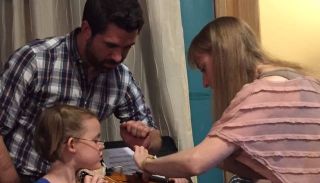
Yes, your child can start an instrument even if no one in your family is musical.
If you’ve been looking for violin lessons in Austin or are exploring the Suzuki method, you’ve almost certainly heard the famous phrase “Every Child Can.”
As Suzuki violin teachers, we love adding its natural companion: “Every Parent Can.” So if you or anyone else in your family has little or no musical background, there’s no need to feel apprehensive. Your role is not about musical ability. It’s about your ability to support, encourage, and learn alongside your child.
It’s Normal to Feel Uncertain at the Beginning
You may worry that you’ll hold your child back or not know if they’re doing it right. These fears are completely understandable, especially when you’re stepping into a role that feels unfamiliar.
But the truth is that you won’t need to diagnose technical problems or produce a beautiful sound yourself. Your teacher will show you exactly what to listen for and what to practice each week.
You might also be concerned about creating conflict or “doing it wrong” during practice. Remember that the goal is not perfect sessions, but a supportive partnership.
When you stay calm, keep practice short and positive, and focus on effort rather than results, you already give your child what they need most.
For those inevitable challenging practice days — which are definitely part of the journey! — we love this quote from Ted Lasso:
It’s not about effort. They’re giving their all. It’s just that their ‘all’ ain’t much right now.
As your child confronts the ups and downs of a challenging pursuit, it’s your dependable presence and support that will help them learn that setbacks aren’t a sign to give up. Over time, your own perseverance will become internalized as their own belief in themselves.
You are not expected to have all the answers. You are simply invited to show up with care and consistency.
The Mother-Tongue Approach (You Already Know How to Do This)
Think about how your child learned to speak. You didn’t need a degree in linguistics — or even perfect grammar. You simply spoke to them throughout the day, highlighted important words (like their favorite food or toy), and celebrated their early efforts. Over time, through natural conversation and loving support, they learned to talk.
Just as every child can learn their native language, every child can develop musical ability when the same conditions are present: consistent listening, positive feedback, and practice. Shinichi Suzuki called this the “mother-tongue approach.”
When you play the repertoire recordings every day, you are giving your child the musical equivalent of daily conversation. Over time, the melodies, rhythms, and beautiful tone become familiar and internalized, so that when your child practices, they already have a clear mental model of how the music should sound.
You do not need to analyze the music, pay strict attention to every note, or be a musician any more than you needed to be a language expert. Creating a consistent, positive daily environment is more than enough.
The hidden superpower of musically untrained parents
Parents without musical training have a hidden superpower.
As a musical novice, you’ll be approaching the instrument with fresh curiosity rather than preconceived ideas. This allows you to become an exceptionally attentive and patient home teacher.
Free from the pressure of your own past experiences, you are more likely to celebrate small steps, follow the teacher’s guidance closely, and keep practice focused on validation and connection.
Meanwhile, your child will appreciate that they get to be the one who’s knowledgeable. Instead of being overshadowed by a more skillful and knowledgeable mentor, they get to be the one to shine. They will enjoy impressing you with their growing skill.
Many successful musicians grew up in non-musical homes
Have great musicians come from non-musical parents? Yes! In fact, there are so many examples that it’s hard to choose just a few. Here are a few:
- The father of composer Peter Ilyich Tchaikovsky was an engineer and metal works director; his mother was trained in languages and needlework.
- The father of composer and pianist Claude Debussy owned a china shop; his mother was a seamstress.
- The father of composer George Frideric Handel was a barber — and even forbade instruments in the house. (We’re not advocating this!)
- The father of tenor Luciano Pavarotti was a baker; his mother worked in a cigar factory.
- The father of virtuoso violinist Joshua Bell was a psychologist and sexologist; his mother was a school counselor.
We could go on, but you get the point. What made the difference wasn’t inherited talent or a home full of instruments. It was a musical environment — in Handel’s case, his school — and daily practice.
Years from now, your child won’t remember whether you knew how to read sheet music or diagnose a bowhold. They will remember that you sat beside them, supported their efforts, and celebrated each small victory. The partnership that you build will become one of the most positive experiences that you share with your child.
Meanwhile, the discipline and strength of character they learn during these daily sessions will give them the wisdom and strength of character to achieve their dreams in whatever profession they ultimately pursue.
Are you ready to start your Austin-area child on violin?
At Enchanted Wood, you’ll start with a few lessons just for yourself, giving you the tools and confidence you need before your child even starts. You’ll learn to play just a few short songs on violin, so that you feel confident handling the instrument. “Hot Cross Buns” isn’t a big lift, even if you’ve never studied an instrument before!
Once your child begins, your role will be to attend lessons, take careful notes, and practice consistently with your child. Your most important job will be to create a calm, nurturing space where your child feels safe to try, make mistakes, and try again.
In daily practice, that simply means keeping sessions short and positive, playing the music in the background, and focusing on encouragement rather than perfection. You don’t have to be the music teacher; you’re their partner in learning.
The bigger goal is character and relationship, not technical perfection.
The daily practice partnership you form with your child becomes a powerful way to develop patience, perseverance, empathy, and mutual respect. All of these qualities will endure far longer than any single polished performance.
As you encounter challenges together, you will change and grow as much as your child will.
After all, in a work relationship it’s easy to write off challenges with, “My coworker is just a jerk. I just have to put up with her for another month till the project is over.” But as a parent, it is literally your job to maintain caring and positive regard for your child no matter what emotions they’re experiencing. As you learn to better support them, you are invited to be accountable for your own contribution to whatever is working.
In the words of educator Christine Goodner:
10 years from now the fact that your child practiced on a random Monday in September is not a life changing event. It’s about who we are raising our children to be.
When you keep the focus on encouragement, connection, and consistent effort rather than perfection, your relationship will grow stronger. Technical skill develops naturally as a byproduct of that deeper work.
Looking for Suzuki Violin Lessons in Austin?
At Enchanted Wood Suzuki Studio, we specialize in guiding young beginners and their parents through every stage of learning the violin. Whether you live in North Austin, Cedar Park, or Round Rock, our studio provides a warm, structured environment where parents and children thrive together.
Ready to get started? Contact our Austin violin teachers today to learn more about violin lessons at Enchanted Wood.